
The Dirty Dozen & Clean 15
Making Smart Produce Choices for your Family
We all know we should be eating more fruits and vegetables, and that’s especially important for children whose growing bodies rely on essential nutrients for healthy development.
At the same time, many families are becoming more aware of pesticide exposure on conventionally grown produce. A recent study found that nearly three-quarters of non-organic produce samples still contained pesticide residues even after washing.
While that may sound concerning, experts agree that the benefits of eating fruits and vegetables still outweigh the risks. The key is learning how to make informed, practical choices that work for your family and budget.
Which Fruits and Vegetables Carry the Most Pesticides?
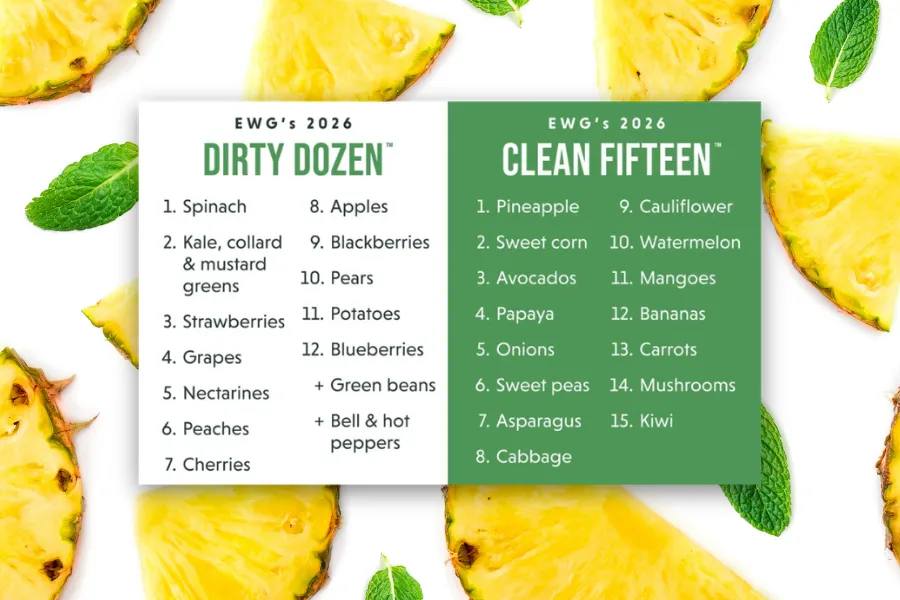
Every year, the Environmental Working Group (EWG) releases its “Dirty Dozen” list, which ranks conventionally grown fruits and vegetables with the highest pesticide residues based on testing from the U.S. Department of Agriculture.
Of the 47 items included in The 2026 Dirty Dozen™, these 12 fruits and vegetables were most contaminated with pesticides:
- Spinach
- Kale, Collard & Mustard Greens
- Strawberries
- Grapes
- Nectarines
- Peaches
- Cherries
- Apples
- Blackberries
- Pears
- Potatoes
- Blueberries
Many of these foods are delicate fruits and vegetables without thick outer skins or peels, making them more vulnerable to pesticide exposure.
According to nutrition experts, these crops may also require more pesticide use during the growing process because they are:
- Close to the ground
- More susceptible to insects and disease
- Difficult to grow without chemical protection
Research has linked long-term pesticide exposure to several health concerns, including heart disease and certain cancers. Children may be especially vulnerable because their bodies and brains are still developing.”
Do You Need to Buy Everything Organic?
For many families, purchasing only organic produce simply isn’t realistic — and that’s okay.
A more affordable approach is to prioritize organic options for the produce your family eats most often, especially foods listed on the Dirty Dozen.
Start by asking:
Which fruits and vegetables do we eat regularly?
Which of those are highest in pesticide residue?
Could we buy organic versions of just those items?
Consumer demand has also helped increase the availability of organic produce, and in some cases, prices are becoming more accessible than they once were.
What Is the “Clean Fifteen™”?
These 15 items had the lowest amounts of pesticide residues, according to EWG’s analysis of the most recent USDA data. Many of these foods have thick protective skins or peels that naturally reduce pesticide exposure.
- Pineapples
- Sweet Corn (fresh and frozen)
- Avocados
- Papaya
- Onion
- Sweet Peas (frozen)
- Asparagus
- Cabbage
- Cauliflower
- Watermelon
- Mangoes
- Bananas
- Carrots
- Mushrooms
- Kiwi
According to EWG researchers, choosing items from the “Clean 15” can help families:
- Increase fruit and vegetable intake
- Stay within budget
- Reduce pesticide exposure without needing to buy everything organic
It’s about balance, not perfection.
The Importance of Washing Produce Properly
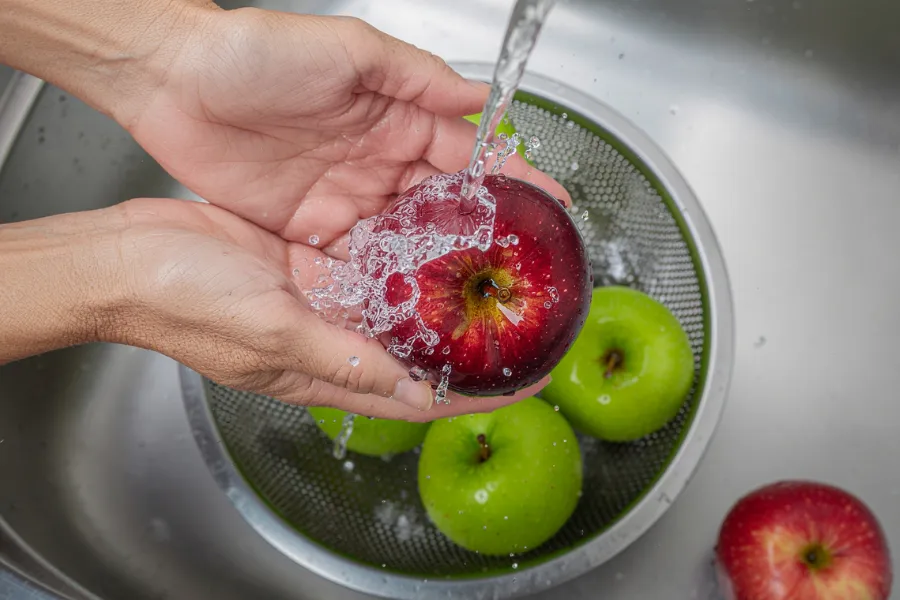
Whether your produce is organic or conventional, washing is essential.
While washing does not remove all pesticide residue, it can significantly reduce dirt, bacteria, and some surface chemicals.
Experts recommend:
- Washing produce under running water for 15–20 seconds
- Gently rubbing fruits and vegetables while rinsing
- Soaking produce in water if desired
- Lifting produce out of soaking water rather than pouring everything together again
Interestingly, specialty produce washes have not been proven to work better than plain water.
Even produce with peels — such as bananas, lemons, mangos, or avocados — should still be washed. Bacteria or residue on the outside can transfer to the inside through knives or handling.
And one often-forgotten tip:
Wash your hands before washing your produce.
Small Changes Can Make a Big Difference
Healthy eating does not need to be all-or-nothing.
If buying fully organic feels overwhelming or financially unrealistic, focus on progress over perfection:
- Prioritize organic for higher-residue produce
- Use the Clean 15 as a guide for budget-friendly choices
- Wash all produce thoroughly
- Continue encouraging fruits and vegetables as part of everyday meals
At the end of the day, eating more fruits and vegetables — in any form — is still one of the best things you can do for your health and your family’s wellbeing.
Marsha Fenwick, C.N.P. R.R.T.
Marsha is not your typical nutritionist. She began her career 20 years ago as a Registered Respiratory Therapist. Later, she earned her certifications as a Registered Nutritional Consultant Practitioner, Certified Nutritional Practitioner, and Registered Orthomolecular Health Practitioner. Marsha is also a Certified Cancer Coach. Her clinical practice specializes in: sustainable healthy weight loss, digestive health, women's hormones, diabetes, heart health, and cancer prevention and recovery. Contact Marsha today for more information and to book a FREE 15 minute nutritional consultation.