🫀 Don’t Fear Cholesterol, Understand It
Why More Women Are Seeing Rising Cholesterol — A Nutritionist’s Perspective
As a nutritionist, I’ve noticed a clear shift in my practice: more female clients are coming in concerned about changes in their cholesterol panels. What’s striking is that many of these women are otherwise healthy, eating well, staying active, and doing “all the right things.”
Recently, I found myself in the same position. For the first time, my own blood work showed an upward trend in cholesterol. That experience pushed me to take a deeper look—not just for myself, but to better support the women I work with every day.
This isn’t just anecdotal. There are real, biological reasons why this is happening, and understanding them can help take the fear—and confusion—out of the conversation.
The Hormonal Connection
One of the biggest drivers of rising cholesterol in women is hormonal change, particularly during perimenopause and menopause.
Estrogen plays a protective role in cardiovascular health. It helps:
- Keep LDL (“bad” cholesterol) lower
- Support higher levels of HDL (“good” cholesterol)
- Maintain flexibility in blood vessels
- LDL levels often rise
- HDL may decrease or become less effective
- Total cholesterol can climb, sometimes quickly
Why This Is Showing Up More Often
Beyond hormones, there are a few reasons I’m seeing this trend more frequently:
- Increased awareness and testing
More women are proactively checking their blood work—and catching changes earlier. - Chronic stress
Long-term stress can impact metabolic health and indirectly influence cholesterol levels. - Changes in body composition
Even without major weight gain, shifts in muscle mass and fat distribution can affect lipid metabolism. - Underlying conditions becoming more common
Issues like Type 2 Diabetes and insulin resistance often develop quietly and can impact cholesterol patterns.
When “Healthy” Isn’t the Whole Story
One of the most frustrating things I hear from clients is:
“But I eat well—how can my cholesterol be high?”
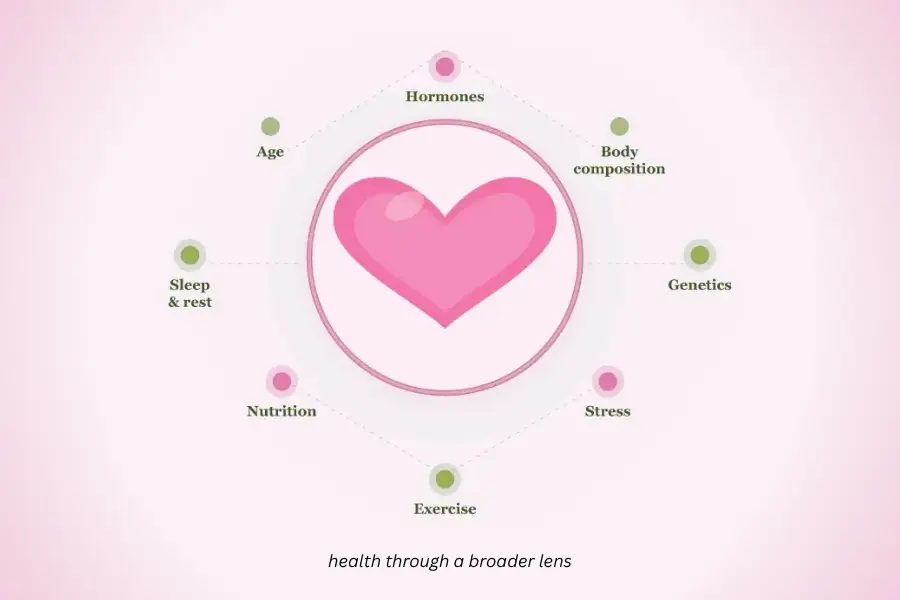
The truth is, nutrition is only one piece of the puzzle. Hormones, genetics, stress, sleep, and age all play a role.
That said, diet still matters and can have a big impact!!
A More Nuanced Approach to Nutrition
For women experiencing rising cholesterol, I often shift the focus from “eating clean” to eating strategically:
Dietary strategies (highest impact first):
- Increase soluble fiber: Oats, barley, legumes, psyllium, and fruit (especially apples and citrus) can meaningfully reduce LDL by binding bile acids. ~5–10 g/day of soluble fiber can lower LDL by ~5–10%.
- Swap saturated fats for unsaturated fats: Replace butter, fatty red meat, and full-fat dairy with olive oil, nuts, seeds, and fatty fish. This shifts LDL particle burden more than just lowering total fat.
- Add plant sterols/stanols: ~2 g/day (fortified foods or supplements) can reduce LDL by ~8–10% by inhibiting cholesterol absorption.
- Reduce refined carbs and added sugars: Not just for triglycerides—this also helps improve overall lipid profile and insulin sensitivity.
- Use a portfolio-style or Mediterranean approach: Combining fiber, plant protein, nuts, and sterols (the “portfolio diet”) can rival low-dose statins in LDL reduction.
Lifestyle factors:
- Regular aerobic exercise: 150 min/week improves lipid metabolism; LDL reduction is modest alone but synergistic with diet.
- Weight loss (if applicable): Even 5–10% body weight loss can significantly improve LDL and ApoB.
- Quit smoking: Improves HDL and endothelial function more than LDL directly, but still important.
- Moderate alcohol intake: Excess intake worsens lipid profiles.
Supplements with evidence:
- Psyllium husk (as above, very effective)
- Omega-3s (more for triglycerides than LDL, but still beneficial overall)
What I Tell My Clients (and Myself)
Seeing a rise in cholesterol can feel alarming—but it’s also an opportunity.
An opportunity to:
- Reassess what your body needs now
- Make targeted, sustainable changes
- Look at health through a broader lens—not just one lab value
Most importantly, it’s a reminder that our bodies are dynamic. What worked in our 30’s or 40’s may not be enough in our 50’s and beyond—and that’s not failure, it’s physiology.
The Takeaway
If you’re noticing changes in your cholesterol, you’re not alone.
For many women, this is a natural transition influenced by hormonal shifts and aging. With the right knowledge and approach, it’s absolutely something you can manage.
As both a practitioner and someone now navigating this personally, my goal is simple:
To replace fear with understanding and empower women to take informed, confident steps toward their health.
Marsha Fenwick, C.N.P. R.R.T.
Marsha is not your typical nutritionist. She began her career 20 years ago as a Registered Respiratory Therapist. Later, she earned her certifications as a Registered Nutritional Consultant Practitioner, Certified Nutritional Practitioner, and Registered Orthomolecular Health Practitioner. Marsha is also a Certified Cancer Coach. Her clinical practice specializes in: sustainable healthy weight loss, digestive health, women's hormones, diabetes, heart health, and cancer prevention and recovery. Contact Marsha today for more information and to book a FREE 15 minute nutritional consultation.